

An office rarely becomes difficult to keep clean overnight. More often, the warning signs appear gradually: shared kitchens need constant attention, bins fill before anyone deals with them, dust gathers around workstations, and staff start taking on cleaning jobs themselves.
If the same problems keep returning, one missed clean may not be the real issue. The cleaning setup itself may no longer suit how the workplace is being used.
1. Your Staff Are Regularly Doing the Cleaning
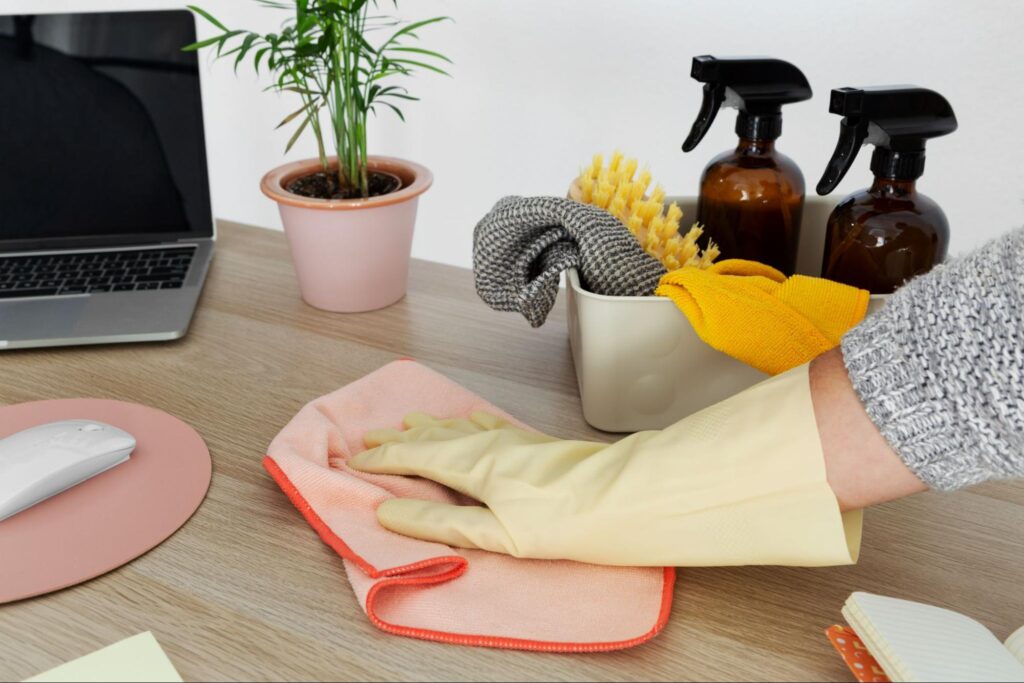
There is nothing unusual about someone wiping up a spill or putting their own mug away.
The problem starts when employees are routinely emptying communal bins, cleaning shared kitchens, wiping surfaces or dealing with washrooms simply because nobody else is responsible for those jobs.
The result is usually inconsistent. Cleaning happens when somebody notices a problem rather than at an agreed time.
If employees are regularly stopping their normal work to deal with bins, kitchens or washrooms, the cleaning arrangement may also be taking more staff time than it should.
A clearer setup separates basic personal tidying from cleaning jobs that need a named owner. That might include responsibility for:
- communal bins
- kitchen surfaces
- washrooms
- floors
- reception areas
- shared touchpoints
If the same employees keep stepping in because those jobs are being missed, the current arrangement may need reviewing.
2. Shared Kitchens and Washrooms Keep Causing Problems
Shared facilities often show gaps in a cleaning routine before the rest of the office does.
In a kitchen or breakroom, recurring issues might include:
- food residue around sinks or worktops
- full bins
- dirty microwaves
- marked cupboard fronts
- crumbs or debris on floors
Washrooms can show similar problems through dirty floors, bins that need emptying, residue around fittings or facilities that are not being kept consistently clean.
If the same complaints keep coming back, occasional cleaning may not be enough. The frequency may need to reflect how many people actually use the space.
The Health and Safety Executive says workplaces must be kept clean, with dirt and refuse removed regularly and suitable waste containers provided. Its guidance also covers clean toilets and hand basins as part of workplace welfare requirements.
That does not mean every untidy office kitchen represents a health and safety breach. It does mean shared workplace facilities need a reliable cleaning arrangement rather than relying on somebody noticing a problem.
3. Visitors Notice Things Your Team Has Stopped Seeing
People who work in the same office every day can become used to small signs of dirt or wear.
Visitors do not have that familiarity.
Entrances, reception desks, meeting rooms and washrooms are often among the first areas they see.
Look out for:
- fingerprints on entrance glass
- visible dust around reception furniture
- dirty or marked flooring
- overflowing bins
- untidy meeting spaces
- neglected washrooms
- lingering smells in shared areas
One mark on a door is not a reason to change the entire cleaning setup.
Repeated problems in the same visitor-facing areas are a stronger sign that the schedule needs reviewing. A busy reception, for example, may need more frequent attention than a back office with much lower footfall.
4. Dust, Grime and Waste Build Up Before the Next Clean
Visible build-up often means the current frequency no longer matches how the workplace is being used.
The problem may not affect every area equally.
| Area | Signs the current routine may be falling behind |
| Desks and shared surfaces | Dust, marks or debris returning well before the next clean |
| Kitchen or breakroom | Food residue, grease, crumbs or overflowing waste |
| Washrooms | Build-up around fittings, floors or bins |
| Reception | Fingerprints, tracked-in dirt or dust visible to visitors |
| Floors | Dirt collecting along edges or busy walking routes |
| Communal areas | The same issues repeatedly appearing between visits |
More frequent cleaning across the whole office may not be necessary.
A busy reception or breakroom may simply need more attention than a quieter workspace. Looking at where dirt actually returns helps you adjust the schedule around real use rather than treating every room the same.
HSE workplace guidance also includes clean premises and appropriate waste containers among the basic facilities employers need to provide.
5. Nobody Is Clear About the Cleaning Schedule
If nobody knows when the office was last cleaned properly, who is responsible for the kitchen, or when the washrooms are due next, the issue is usually organisational rather than simply cosmetic.
Ad hoc cleaning can deal with an occasional spill or overflowing bin.
It becomes unreliable when several people assume somebody else will handle the same recurring jobs.
A simple review can help:
- Identify the busiest areas. Start with washrooms, kitchens, entrances and shared workspaces.
- Separate routine and periodic jobs. Emptying bins is different from detailed floor care or internal window cleaning.
- Set a frequency based on use. Footfall, staff numbers and operating hours matter more than copying another office’s schedule.
- Check whether the timing works. Cleaning during the busiest part of the day may create unnecessary disruption.
- Review the result. If an area is dirty again long before the next clean, adjust the schedule.
Acas says employers have a duty of care towards workers and must take reasonable steps to protect their health and safety. Its workplace health and safety guidance includes identifying risks, taking steps to reduce them and reviewing the action taken.
Cleaning is only one part of workplace management, but clearly assigning responsibility is more reliable than waiting until somebody complains.
What Changes When Cleaning Has a Clear Plan?
Moving from informal cleaning to a planned arrangement does not mean every part of the office needs cleaning every day.
A schedule can reflect how the premises actually operate.
That could mean:
- more frequent attention in kitchens and washrooms
- entrance cleaning around periods of heavy footfall
- quieter spaces on a lighter schedule
- periodic internal window cleaning
- regular waste and recycling collection
- cleaning before or after normal working hours
A clear schedule also makes it easier to see which jobs are being completed, how often they are being done and where standards are beginning to slip.
When the Current Cleaning Setup Is No Longer Enough
If staff are repeatedly stepping in, shared facilities keep causing complaints, or visitor-facing areas are becoming difficult to maintain, the current cleaning setup may no longer be enough.
The same can apply when different areas clearly need different cleaning frequencies or when cleaning needs to happen outside normal working hours.
We provide office cleaning for workplaces that need a clearer, more consistent cleaning routine.
For broader commercial cleaning support, our team can cover desks and surfaces, kitchens and breakrooms, washrooms, reception and communal areas, floors, internal windows, and waste and recycling management. We can also arrange cleaning around business hours, including early mornings, evenings and weekends.
Our commercial cleaners are DBS-checked and fully insured, and our team is COSHH-trained. We also provide regular on-site audits and a dedicated account manager for commercial clients.
If your premises need a different type of cleaning support, our cleaning services page gives an overview of the other options we provide.

Before You Change the Cleaning Setup
Do not assume the whole office needs cleaning more frequently just because one area is becoming difficult to maintain.
Start with the places where the problems actually occur.
Ask:
- Where are complaints coming from?
- Which areas become dirty first?
- Are staff regularly doing cleaning jobs themselves?
- Are visitor-facing spaces being maintained consistently?
- Do bins fill before the next scheduled clean?
- Is cleaning happening at a time that suits the business?
- Does one high-traffic area need a different frequency from the rest?
The answers can help show whether the problem is the cleaning frequency, unclear responsibility or the scope of the work itself.
Focus on the Problems That Keep Coming Back
An office may need a professional cleaning company when the same issues keep returning despite informal efforts to stay on top of them.
Staff repeatedly cleaning shared areas, recurring kitchen or washroom complaints, visitor-facing spaces looking neglected and unclear cleaning responsibilities are all reasons to review the current setup.
The goal is not simply to clean more often. It is to have a routine that reflects how the workplace is actually used and gives the busiest areas the attention they need.