
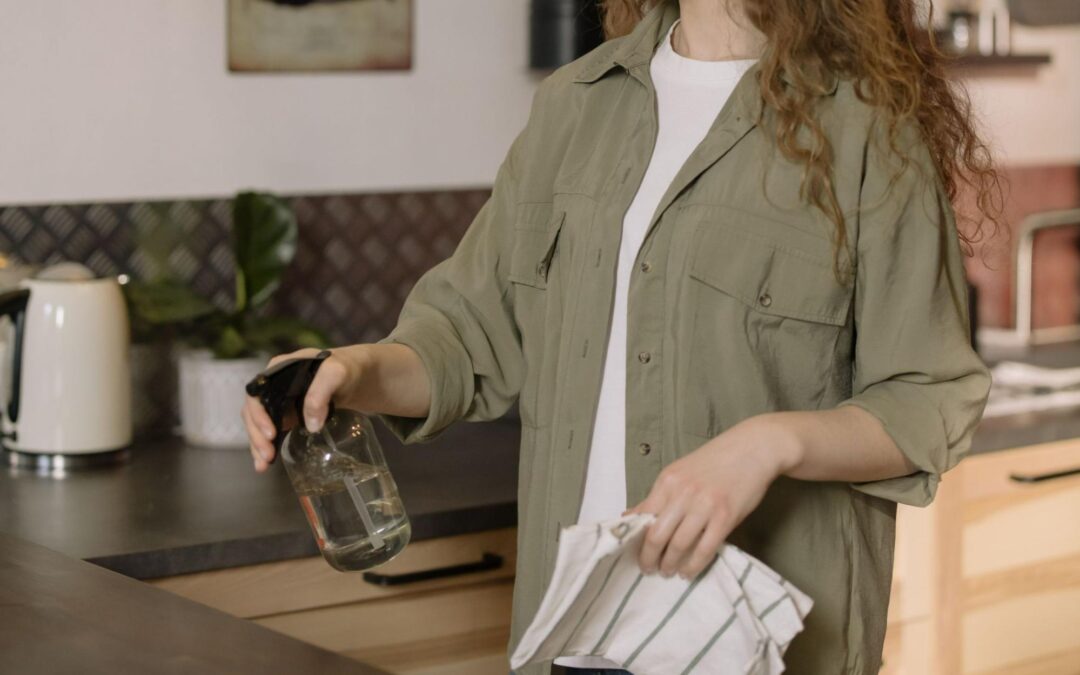
An end of tenancy clean is easier to manage when you work through the property in a set order. Start with your inventory, tackle the kitchen and bathroom first, then move through the bedrooms, living areas, floors and final checks before handing back the keys.
The aim is not necessarily to make an older property look brand new. It is to leave it clean and in a condition that reflects how it was handed over to you, allowing for reasonable wear and tear.
Start With Your Inventory
Before reaching for the cleaning products, find the inventory or check-in report you received when you moved in.
Go through it room by room and compare the recorded condition with how the property looks now. If you took photographs when you moved in, check those too.
This gives you a useful reference point for deciding what genuinely needs attention. It can also help you distinguish dirt or staining that needs cleaning from changes that may simply have developed through everyday use.
Start with the kitchen and bathroom if they need the most work. Jobs such as cleaning an oven, defrosting a freezer and removing limescale are easier to deal with before moving day gets hectic.
Room-by-Room End of Tenancy Cleaning Checklist
Work through one room at a time and finish the floor last. That way, you are less likely to re-dirty an area while wiping cupboards, moving lightweight furniture or dealing with appliances.
Kitchen
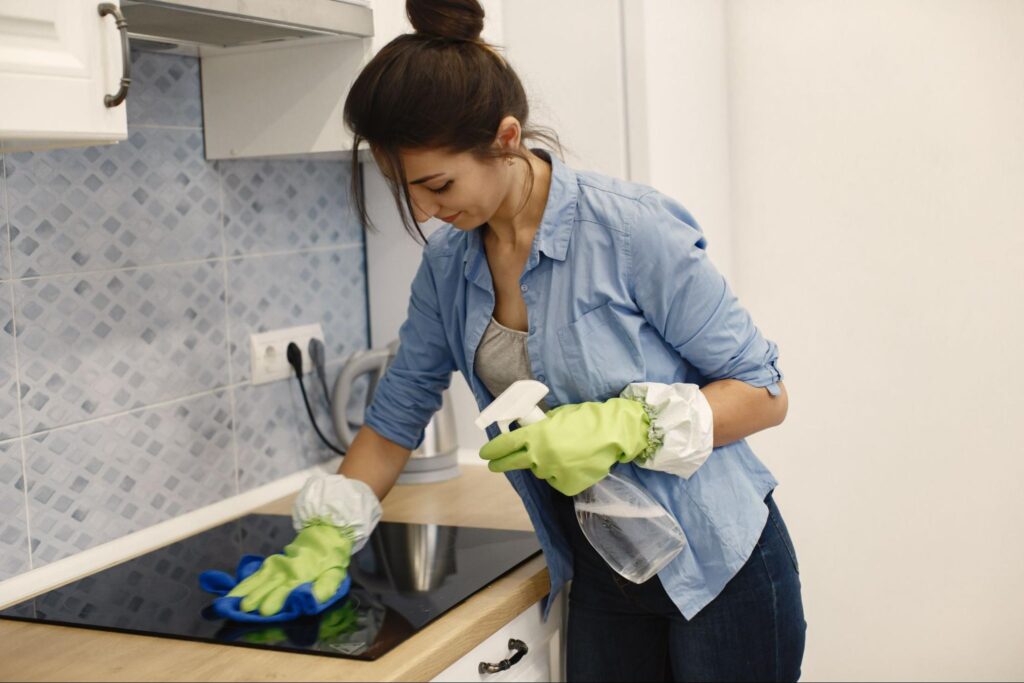
The kitchen is worth starting early because ovens, extractor fans, fridge-freezers and cupboard tops can all take longer than an ordinary surface clean.
Begin with anything that needs soaking, defrosting or degreasing.
Oven and Hob
Clean the oven cavity along with:
- oven racks
- trays and grill pans supplied with the property
- the inside of the oven door
- the seal around the door
- knobs and controls
- the hob and surrounding surfaces
Look beyond the parts you can see immediately. Grease and burnt-on food often collect around door edges, racks and the area surrounding the hob.
Extractor Fan
Grease can build up underneath and around the extractor even when the visible surface looks fairly clean.
Wipe the exterior, underside and accessible fittings. If the extractor has removable filters, check the manufacturer’s instructions before cleaning them.
Fridge and Freezer
If these appliances belong to the property, empty them.
Defrost the freezer where necessary, then clean the shelves, drawers, door compartments and seals. Allow enough time for everything to dry before the final inspection.
Check underneath and behind movable appliances too, where it is safe and practical to do so.
Cupboards, Drawers and Worktops
Empty cupboards and drawers before wiping inside them.
Then clean:
- cupboard fronts
- handles
- shelves
- worktops
- splashbacks
- tiles
- sink
- taps
Remember to look above wall cupboards. Their tops are easy to forget because they are rarely included in everyday cleaning.
Bathroom
A bathroom can look clean at a glance while still having limescale around taps, soap residue on shower screens or grime along grout lines.
Clean the toilet thoroughly, including around the base and behind it where accessible.
Then check the:
- sink and taps
- bath
- shower enclosure
- shower screen
- tiles
- grout
- mirrors
- shelving
- extractor fan
- bathroom floor
Pay particular attention to limescale around taps, shower fittings and glass.
If you find mould, damaged sealant or another problem that does not come away through ordinary cleaning, avoid repeatedly scrubbing the area or applying increasingly strong products. Some issues may need maintenance rather than more cleaning.
Living Room and Bedrooms
Remove your belongings before cleaning so you can reach areas that have been hidden by furniture or storage.
Work from the top of the room down and leave vacuuming or mopping until the other surfaces are finished.
Check:
- shelves
- fitted storage
- inside wardrobes
- drawers
- skirting boards
- door frames
- window sills
- accessible window glass
- curtain poles or rails
- radiators
- light switches
- accessible light fittings
- plug socket surrounds
Dust often gathers along edges and behind furniture, so move lightweight items where practical rather than simply cleaning around them.
Floors and Carpets

Vacuum carpets slowly enough to deal with the edges and corners rather than making one quick pass through the centre of the room.
Pay particular attention to:
- edges beside skirting boards
- corners
- underneath furniture that can safely be moved
- doorway edges
- stairs
Hard floors should normally be vacuumed or swept first, then cleaned with a product suitable for the flooring material.
If you are dealing with a carpet stain, check the carpet or product manufacturer’s instructions before using a stronger treatment. An unsuitable cleaner can affect the colour or finish and leave a more noticeable mark than the original stain.
Final Checks Before You Hand Back the Keys
Once the main cleaning is finished and most of your belongings are out, walk through the property again.
An almost-empty room makes it much easier to notice dust, marks or forgotten areas that were hidden while you were packing.
Check the Easy-to-Miss Areas
Take another look at:
- the tops of kitchen cupboards
- behind the toilet
- inside the microwave
- oven door edges and seals
- window tracks
- window sills
- door handles
- cupboard handles
- extractor covers
- curtain rails
- skirting behind doors
- corners behind furniture
- inside fitted storage
Give these areas a final check once the main cleaning is finished, as they are easy to miss when you are working quickly.
Look for Marks on Walls and Surfaces
Wall marks need a little more judgement than ordinary dust.
Some light marks may come away with gentle cleaning, but scrubbing painted walls too aggressively can remove paint or change the finish.
Start cautiously and stop if the surface begins to change.
Not every visible sign of use means the property needs to be restored to brand-new condition. Rent Smart Wales states that deposit claims should be reasonable and should not cover fair wear and tear, so your inventory and check-in photographs can provide useful context when you are looking at marks or changes around the property.
Do One Final Walk-Through
Once the property is empty and cleaned, do one last check before returning the keys:
- Stand at the doorway and scan the room. An empty room makes dust, marks and missed areas easier to spot.
- Check from the floor upwards. Look along edges, skirting boards, surfaces and fittings rather than only at eye level.
- Open cupboards and drawers. Check fitted storage, underneath sinks and other spaces that are easy to close and forget.
- Look behind doors and around appliances. These areas can still be missed after an otherwise thorough clean.
- Take dated photographs. Keep a record of the property’s condition once your belongings have been removed.
Can Cleaning Affect Your Deposit?
Cleaning can form part of a deposit discussion, but it is not the only factor.
According to Welsh Government guidance on tenancy deposits, you can get your deposit back at the end of the tenancy if you meet the terms of your occupation contract, do not damage the property and pay the rent and bills you are responsible for.
A landlord may seek to retain some or all of the deposit where those conditions have not been met. Qualifying deposits in Wales must also be held in a government-approved tenancy deposit protection scheme.
Your occupation contract matters because it sets out the responsibilities agreed between you and the landlord. Keeping your inventory, check-in photographs and photographs taken when you leave can make it easier to compare the property’s condition at both points.
For agreements covered by the Welsh rules, Welsh Government guidance says tenants cannot be charged checkout or move-out inspection fees.
Should You Hire an End of Tenancy Cleaner?
You can clean the property yourself if you have enough time, suitable equipment and a clear idea of what needs doing.
The harder part is often finding enough time to do it properly once packing, moving belongings and returning keys are already competing for attention. Oven cleaning, shower descaling and emptying cupboards can easily take longer than expected.
If the cleaning list is competing with moving day, bringing in a cleaner can take one sizeable job off the schedule.
At The Ready Maids, we offer end of tenancy cleaning for tenants preparing a property for checkout. We also offer a re-clean guarantee if something is flagged at checkout, and we serve Swansea, Neath, Mumbles, Sketty, Gorseinon and Fforestfach.
If you would like help getting the property ready before you return the keys, you can contact The Ready Maids for a quote.